
Moving Commitments into Action – reflections on how working together and inclusive data are key to tackling the gendered impacts of the climate crisis.
In a time of fierce pushback against hard-won gains, reaching agreement and making commitments continues to matter. But commitments are most impactful when they’re implemented. Progress in motion is harder to undo.
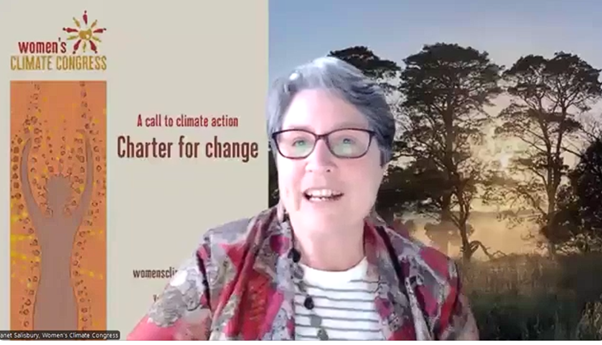
Last week Equality Insights Strategic Adviser Joanne Crawford joined the first Women’s Climate Conversations online event for the year — a conversation with Fleur Newman, UNFCCC Unit Lead for Gender, Children and Youth and ACE and Sally Box, Head of International Negotiations at the Commonwealth Department of Climate Change, Energy, the Environment and Water (moderated by WCC Founder Dr Janet Salisbury) on the significance of the Belém Gender Action Plan and the importance now of collectively ensuring its implementation, to accelerate action on gender equality and climate change.
Watch the full conversation here:
The Belém Gender Action Plan shows what’s possible.
At the international climate conference COP30 in Belém Brazil last November, despite watered down language, a lukewarm financing commitment, and a mobilised anti-rights agenda, 195 countries (including Australia) adopted the Belém Gender Action Plan in a significant win for gender equality and gender-informed climate action.
Decades of feminist organising and activism in multilateral spaces brought us to this moment – sowing seeds of resistance, centring collaboration and care, and insisting that thriving futures for people and planet are deeply intertwined.
The Lima Work Programme on Gender has been around since 2014. Yet, despite growing recognition of gender equality in climate policies and actions, the pace of genuine integration – of gender into climate policies and climate into gender frameworks – has been too slow.
The Belém Gender Action Plan provides a framework for implementation at both global and national levels. Of particular significance is its new focus on unpaid care work – reflecting research that climate change influences the amount, distribution, and conditions of care work, carried out disproportionately by women and girls worldwide. Effective climate action must be rooted in justice, care, and transformation.
Also significant is the plan’s emphasis on data and evidence, particularly enhancing ‘capacity-building for governments and other relevant stakeholders in collecting, analysing and applying gender- and age-disaggregated data and conducting gender analysis to help shape gender-responsive policies.’
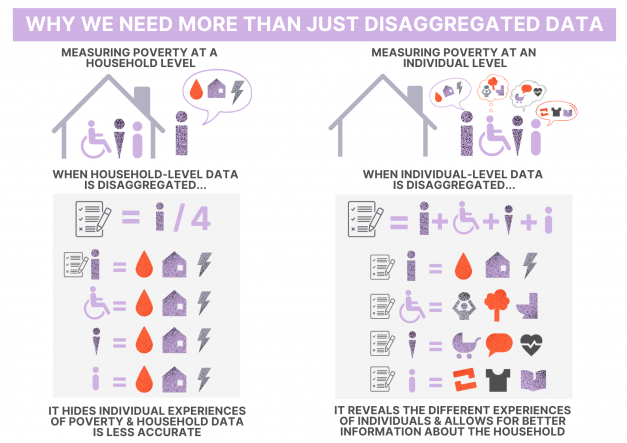
Disaggregated data matters. The upcoming climate meeting in Bonn in June (SB64) includes an expert dialogue on relevant issues in gender and age-disaggregated data and gender analysis. But what gender- and age- disaggregation can reveal is determined by the kind of data that is disaggregated. For example, disaggregating household-level poverty data by gender and age can show the number of people living in households that as a whole are poor, and the gender and age compositions of households. But it cannot show differences in the circumstances of individuals inside a household by gender, age, disability or other individual characteristics, and the different impacts of a changing climate on people’s lives, depending on gender, age, disability and economic and social roles.
Insight into the implications of a changing climate on people’s lived realities requires individual-level data, about multiple aspects of life. As an individual-level multidimensional poverty measure that includes time-use, environment and paid and unpaid work as specific dimensions, Equality Insights can uniquely provide gender-, age- and disability-disaggregated data that illuminate links between a changing climate, economic opportunity, poverty. care work, and how these vary by gender, age and disability – and how gendered demands are magnified when climate disasters strike.
Movements matter for change.
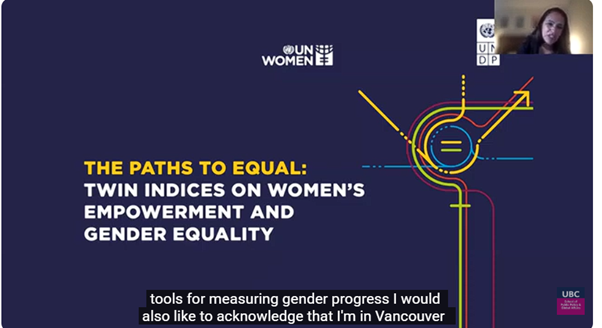
Over history we can see how change towards gender equality is driven by women’s movements. By the ways movements and activists name what’s missing, articulate what’s possible, shift public opinion, insert issues into public and policy agendas and resist roll backs when they come. For more on this, you can hear Laurel Weldon talk about the Feminist Mobilisation Index in this webinar, from 53:48.
Understanding how feminist movements and civil society activate and collaborate helps identify the levers available to:
- Transform ideas. Naming silences or gaps in knowledge, identifying research priorities, and driving analysis and advocacy helps move ideas into action. This is the kind of political and intellectual groundwork that makes a Gender Action Plan possible.
- Create the political space that makes change possible. By working with others through coalitions, alliances or networks, feminist civil society progresses ideas and priorities towards fundamental change, and creates conditions for others to move faster and further than they could alone. By identifying and communicating priorities, they offer opportunities for governments to respond and act on concerns.
- Hold power accountable. Technical monitoring, political pressure and sustained attention are essential to accountability – and without accountability mechanisms, realisation of commitments through action will be slower and more limited.
- Connect levels of change-makers. From the halls of parliament to UN negotiations, to grassroots movements and community organising, feminist civil society bridges global frameworks and local realities. We bring ambition, context, collaboration and community to multilateral processes, and support women and gender-diverse people to shape decisions that affect our lives.
The opportunity for leadership.
In the lead up to the landmark UN Conference on Environment and Development in Rio in 1992, women organised to testify about what was happening to their lives and land and to share their perspectives and priorities. In Australia the National Women’s Consultative Council undertook national consultations, outlining Australian women’s priorities for environmental action. Globally, women came together at the World Women’s Congress for a Health Planet in 1991 to develop a Women’s Action Agenda 21, to take to Rio.
Over the decades since there have been many, often unintentional, missed opportunities to act. We cannot afford to miss another one. As we think about how to activate feminist civil society to realise the nine-year Belém Gender Action Plan and utilise its framework to accelerate action on gender equality and climate, there is a rich history to build on, and a complex current context to navigate.
We live in a world of multiple channels, few town squares, short attention spans, an attention economy that privileges unhelpful algorithms and very coordinated and well-resourced anti-rights actors.
There are also more organisations and networks focused on women and climate, and gender and environment than ever before, at national, regional and global levels.
So how can feminists support moving commitments into action in this context? With intentionality, focus, accountability and resourcing.
Strengthening inclusive data is essential to this. We need deeper insights and better evidence that actually reflects the lives of everyone, if we are to accelerate change.
This requires investing in individual-level data that brings visibility to the ways that gender, age, disability, and geography shape how people interact with the environment and are impacted by the climate crisis. We need evidence-informed action, grounded in data that reveals the lives and agency of the people it’s supposed to serve.
The time is now.
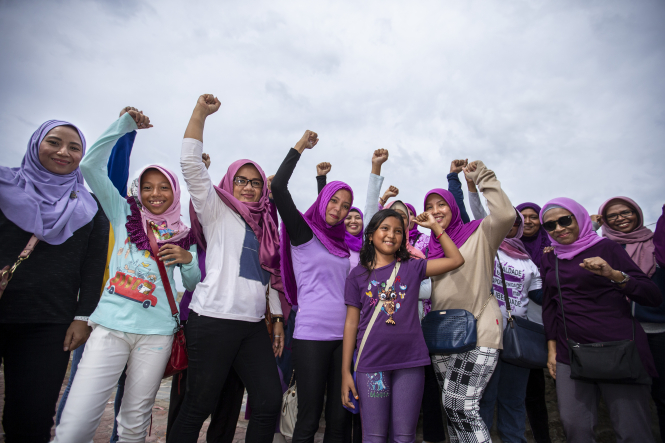
From CSW70 earlier this year, to Women Deliver later this month through the Feminist Foreign Policy Ministerial in Spain, SB64, the High-level Political Forum for Sustainable Development, and COP 31 in November, 2026 is a year to make change happen. Showing up in all of these spaces and places as a coordinated and activated movement and connecting with other social movements will help ensure related priorities are pursued together, so gender equality priorities shape and advance gender-informed climate action.
Feminist leadership, organisations and networks, and inclusive data that makes lived realities visible, are key to bring the Belém Gender Action Plan to life and into the heart of change. The anti-rights movement may be organised, well-resourced and strategic.
But feminists are knowledgeable, committed, connected and resourceful. This is not the time to wait and see. It’s a time for individuals, organisations and networks to push, separately and together, in all spaces and places, for an inclusive, equitable, just and sustainable future.
Comments