
Inclusive data plus feminism are key ingredients for climate justice
Reflections on the June Climate Meetings and feminist organising
By Joanne Crawford, AM
Earlier this month, I joined climate and gender experts from around the world in Bonn Germany for the 64th Session of the UNFCCC Subsidiary Bodies (SB64). This was the first major milestone after agreement on the Belém Gender Action Plan. I was there primarily for the expert dialogue on gender- and age-disaggregated data and gender analysis, the first mandated event in the Belém Gender Action Plan’s nine-year pathway to support evidence-based and responsive climate action.
There was significant hope for this landmark agreement, which is designed to build out and deepen the data and evidence to support action on climate and gender equality, together. Hope, for the potential of the Gender Action Plan, from the feminist delegates determined to shepherd in change, including by embedding disaggregated and intersectional data and evidence. And hope for the possibilities created by collaboration between the UNFCCC Secretariat and the Gender and Environment Data Alliance (GEDA) on the one-day Expert dialogue itself.
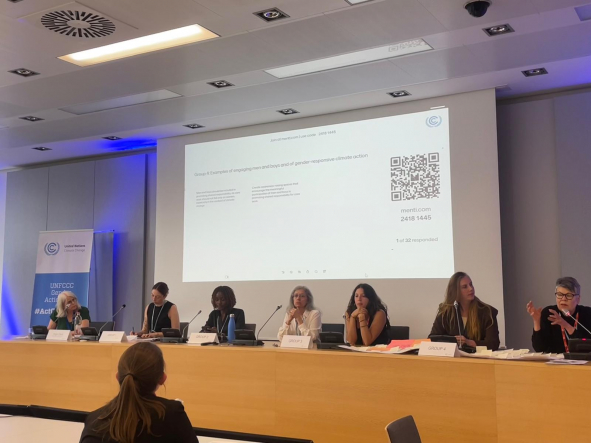
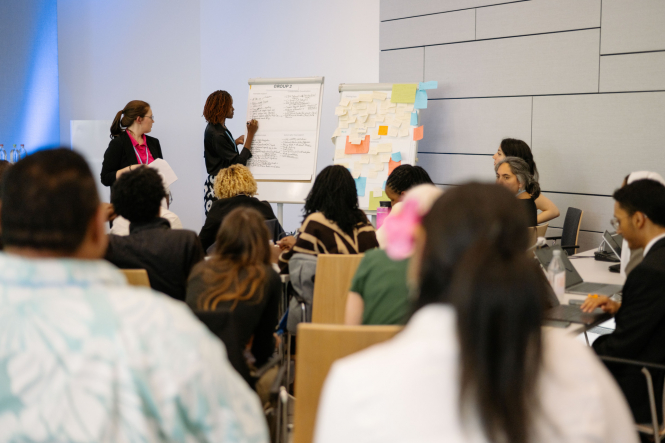
The Expert dialogue brought together governments, civil society and others to: consider the current data landscape and methodologies; good practices; how ‘multidimensional’ (in this context used to mean ‘intersectional’) factors can be integrated into data collection, analysis and use; identify opportunities for enhancing coherence, including by leveraging existing datasets to inform gender-responsive climate policy and action; surface persistent methodological, financial, institutional and political gaps and barriers; and explore standards and modalities for non-extractive, rights-based and data-sovereign approaches.
Across the day, panellists and working groups surfaced and discussed needs and priorities, and outlined directions to support the GAP’s focus on data. As Fleur Newman, gender lead at the UNFCCC Secretariat put it, ‘This is not a niche conversation. It is foundational. Across just transition, adaptation, loss and damage, mitigation — data shapes who gets seen and whether our policies deliver for the people who need them most. The discussions [at the expert dialogue] will directly inform national assessments due in 2027 and the first Global Dialogue on Gender and Environment Data at COP 32.’
Change happens when feminists are in the room
I first engaged in a global convening on gender and environment issues at the World Women’s Congress for a Healthy Planet in 1991. While I am regularly involved in multilateral work, this was my first time contributing to a UNFCCC mechanism. I’ve never been more grateful to be grounded in collective feminist expertise and experience, which helped navigate the scope of the days.
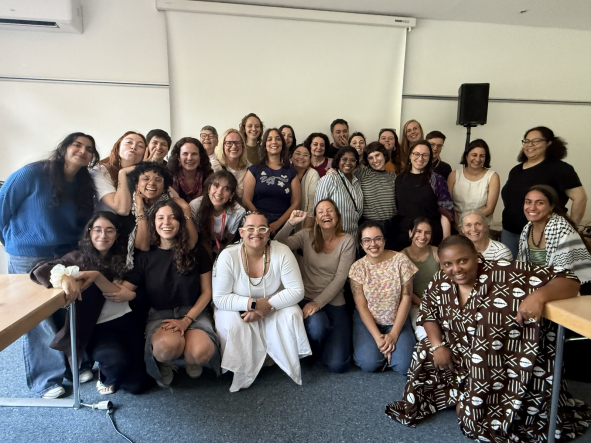
We kicked off with the Women and Gender Constituency’s strategy meeting, with around 35 people. Some I knew well, others by reputation, and many I was meeting for the first time. This was an intentional, welcoming, collective feminist space for knowledge-sharing and political orientation. It was a space to connect and learn about motivations, histories, priorities, working methods, and the Constituency’s key demands for SB 64.
The ways in which the Women and Gender Constituency showed up at SB64 matters beyond the practicalities of navigating a large meeting. It models something important about how change actually happens: not through any single expert or institution, but through deliberate collaboration and coordination that creates space for diverse perspectives and enables people to contribute what they can to collective coverage and impact. The combination of individual and institutional leadership that enables this is a joy to be part of. And it matters particularly in the gender and climate space. The commitments to gender data and evidence in climate reporting and national assessments through the Belém Gender Action Plan will be brought to life in their implementation.
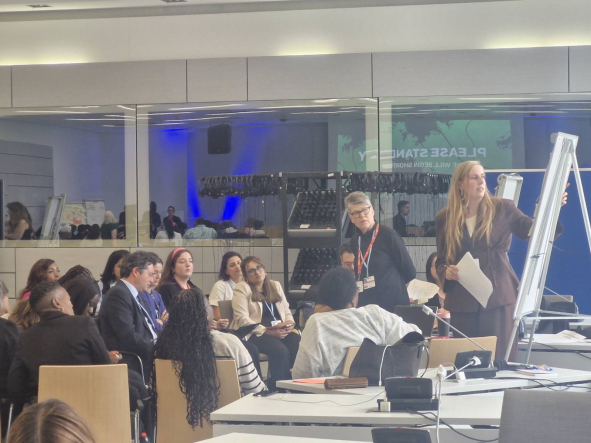
These multilateral convenings and their complex and layered agendas also bring frustration. Too often important technical and implementation work is hampered by politicking and slowed by broader geopolitical tensions and lack of agreement on fundamental issues including financing.
The Women and Gender Constituency’s outcome statement described this as a ‘troubling display of power politics and the manipulation of the consensus model to protect the interests of a few at the expense of the many.’
Turning commitments into action
The Belém Gender Action Plan is a singular achievement. It supports commitments with an implementation framework to enable evidence-based national reporting. It makes clear that gender-and age-disaggregated data and analysis are not optional additions to climate work they are integral to understanding the multiple and differentiated impacts of the climate crisis.
From Equality Insights’ perspective, the Belém Gender Action Plan is a foundation, a pathway, and an integration tool. Its significance lies in what it makes possible: climate reporting and national assessments that are evidence-based and gender-responsive and that incorporate gender- and age-disaggregated data and intersectional analysis.
The Gender Action Plan creates a reporting mandate can only be met with individual-level data. Population-level or household-level statistics will not reveal what is happening inside households, or how climate impacts are being experienced differently by women, men and gender-diverse people and by other structurally marginalised people and groups including people with disabilities and people experiencing discrimination on the basis of sexual orientation and gender identity or expression.
As a world-leading individual-level multidimensional measure, with an associated survey instrument that captures lived experience across dimensions including care, health, safety, economic participation and environment, Equality Insights connects the evidence base that the Belém Gender Action Plan calls for with the feminist analytical frameworks needed to make that evidence meaningful.
Individual-level data reveals how different people experience climate impacts and resilience
The long shadow of insufficient attention to gender data means not all the data needed to support gender-informed and responsive climate action currently exists. The Belém Gender Action Plan is a framework for changing this. And an emphasis on disaggregated data is necessary but not sufficient. Individual-level data is key for a nuanced understanding of how people experience climate impacts and resilience. It can reveal who is most impacted in a changing climate, who has lower or higher capacity to adapt, and who faces compounding risks, as well as the ways individuals exercise agency, transform their livelihoods, access essential services, and build resilience. Such data in turn enables the design of effective and targeted strategies that respond to diverse needs, capacities, and circumstances.
Championing use of inclusive data and measurement tools to strengthen gender equality, disability and social inclusion in climate resilience and sustainable development has been a focus of our collaboration with the University of Technology Sydney – Institute for Sustainable Futures. This short video highlights why Individual-level data is critical to understanding different climate impacts and agency, as this short video highlights.
The road ahead
This work is becoming more urgent. COP31 in November will meet against a backdrop of attacks on gender equality and exacerbated climate events associated with the extreme heat this northern hemisphere summer.
The Belém Gender Action Plan recognises that gender equality and climate action are inseparable priorities, and data and evidence are the foundation for effective action. The collective feminist mechanism provided by the Women and Gender Constituency is an essential asset and partner, simultaneously connected to the lived realities of constituencies, and the power and possibilities of acting together.
The strength that comes from starting in a collective feminist space, and carrying that grounding through everything that follows, is not incidental to this work. It is integral to ambitious, right-based, gender-responsive climate action, and to sustaining the political will essential to climate action.
We’ll unpack opportunities to build data that supports the first reporting requirements in 2027 and the strategic significance of the Gender Action Plan in more detail in the coming week. Stay tuned for more.

Comments